When generative AI broke into the mainstream, “Prompt Engineer” quickly became one of the most talked-about job titles in tech. Flush with venture capital and desperate for immediate competitive advantages, startup founders and hiring managers rushed to recruit candidates who could craft intricate system instructions, design complex few-shot context windows, and fine-tune large language model (LLM) outputs.
However, as AI technology matures into everyday enterprise software, the operational realities of building scalable, revenue-generating products have evolved dramatically. The initial wave of experimentation with standalone prompt tweaking has settled into a much clearer production mandate: building secure, resilient, low-latency, end-to-end systems that deliver measurable business value.
For engineering leaders, CTOs, and early-stage founders deciding how to allocate limited hiring budgets, understanding the practical difference between these two roles is critical to preserving runway, lowering technical debt, and maintaining sprint velocity.
Defining the Operational Roles
While both roles interact heavily with AI technologies, their scope, toolchains, and long-term deliverables within a modern software architecture differ significantly:
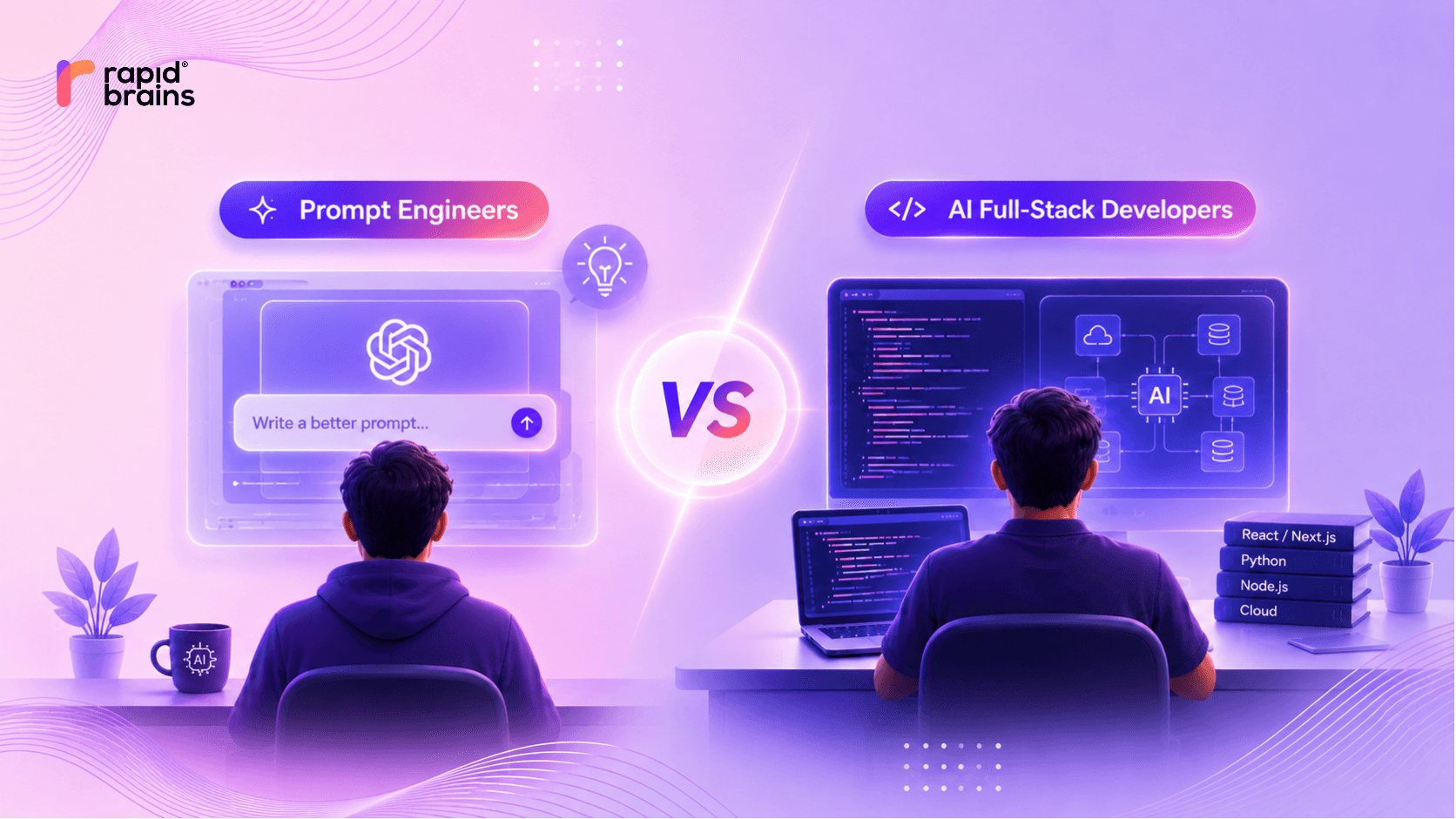
| Dimension | Standalone Prompt Engineer | Full-Stack AI Developer |
| Primary Scope | Context window optimization, system instruction design, and output guardrails. | End-to-end web architecture, LLM integrations, backend APIs, and frontend interfaces. |
| Core Skill Set | Prompt evaluation, chain-of-thought strategies, few-shot prompting, and tone calibration. | Python, TypeScript, React/Next.js, LangChain/LlamaIndex, Vector Databases, and Docker. |
| Primary Deliverables | Refined model responses, structured JSON outputs, and reduced hallucination rates. | Retrieval-Augmented Generation (RAG) pipelines, user authentication, database design, and production UI. |
| System Impact | Concentrated primarily on model-layer interactions. | Full application lifecycle from database schemas to client-side deployment. |
The Natural Shift Toward Full-Stack Integration
While prompt composition remains an important skill, treating it as an isolated, standalone job title presents serious operational and strategic challenges for growing companies:
1. Evolving Base Models Render Static Prompts Obsolete
Modern frontier models feature enhanced instruction-following, multi-modal comprehension, and native reasoning capabilities right out of the box. Highly complex, 200-line system prompts built for earlier model generations are increasingly replaced by cleaner, simpler prompt structures on newer foundation models. Relying on overly complex prompt engineering alone builds fragile systems that break upon model updates.
2. Context Tuning Does Not Deliver Complete Products
A well-crafted prompt cannot query a relational database, manage API rate limits, handle session tokens, ensure strict compliance, or render an intuitive user dashboard. Prompt engineering isolated from software development creates “demoware”,prototypes that look impressive in a pitch deck but fail under actual production stress.
3. Rapid Absorption Across Core Engineering
Just as version control, automated unit testing, and API consumption became standard baseline expectations for modern developers, prompt optimization has naturally been absorbed into the core skill set of versatile full-stack software engineers.
Technical Comparison: Architecting a Production Feature
To illustrate why startup engineering teams require full-stack capabilities, consider what happens when building a simple enterprise feature, such as an automated PDF summarizer with custom user query capabilities:
A Prompt Engineer works primarily on the bottom layer: writing instructions that force the LLM to output clean summaries without hallucinating.
A Full-Stack AI Developer, by contrast, builds the entire system architecture:
- Engineering the frontend drag-and-drop file upload interface in React.
- Parsing PDF binary data into text chunks using Python backend services.
- Generating vector embeddings and running semantic similarity searches against Pinecone or Qdrant.
- Structuring the precise prompt context passed into the LLM.
- Handling streaming API responses, rate limits, token cost calculations, and user access control.
Aligning Your Next Hire with Product Milestones
Choosing which expertise to prioritize depends heavily on your current codebase, team structure, and immediate product roadmap:
When to Hire a Full-Stack AI Developer
- Building Production RAG Systems: You need to connect external LLMs with enterprise databases, vector stores, and custom APIs safely and efficiently.
- Shipping User-Facing Features: You require an engineer who can handle backend business logic, write relational database queries, and build responsive frontend user interfaces.
- Managing Infrastructure & Performance: You need to optimize API token consumption, reduce end-to-end latency, set up caching mechanisms, and monitor cloud deployments.
When to Seek Prompt Engineering Expertise
- Specialized Output Alignment: Your core product architecture is already live and stable, but you require targeted refinements to align natural language outputs with strict industry standards (e.g., legal, financial, or medical formatting).
- Adversarial Safety Audits: You need dedicated red-teaming specialists to evaluate prompt injection risks, system bypasses, and establish safety guardrails prior to enterprise contract sign-offs.
Scale Your AI Capabilities with RapidBrains
Building modern, enterprise-ready AI applications requires engineering talent capable of bridging the gap between complex model orchestration and reliable software architecture. Sourcing vetted, high-performing full-stack developers locally can often involve multi-month recruiting cycles that stall your product roadmap and waste critical startup runway.
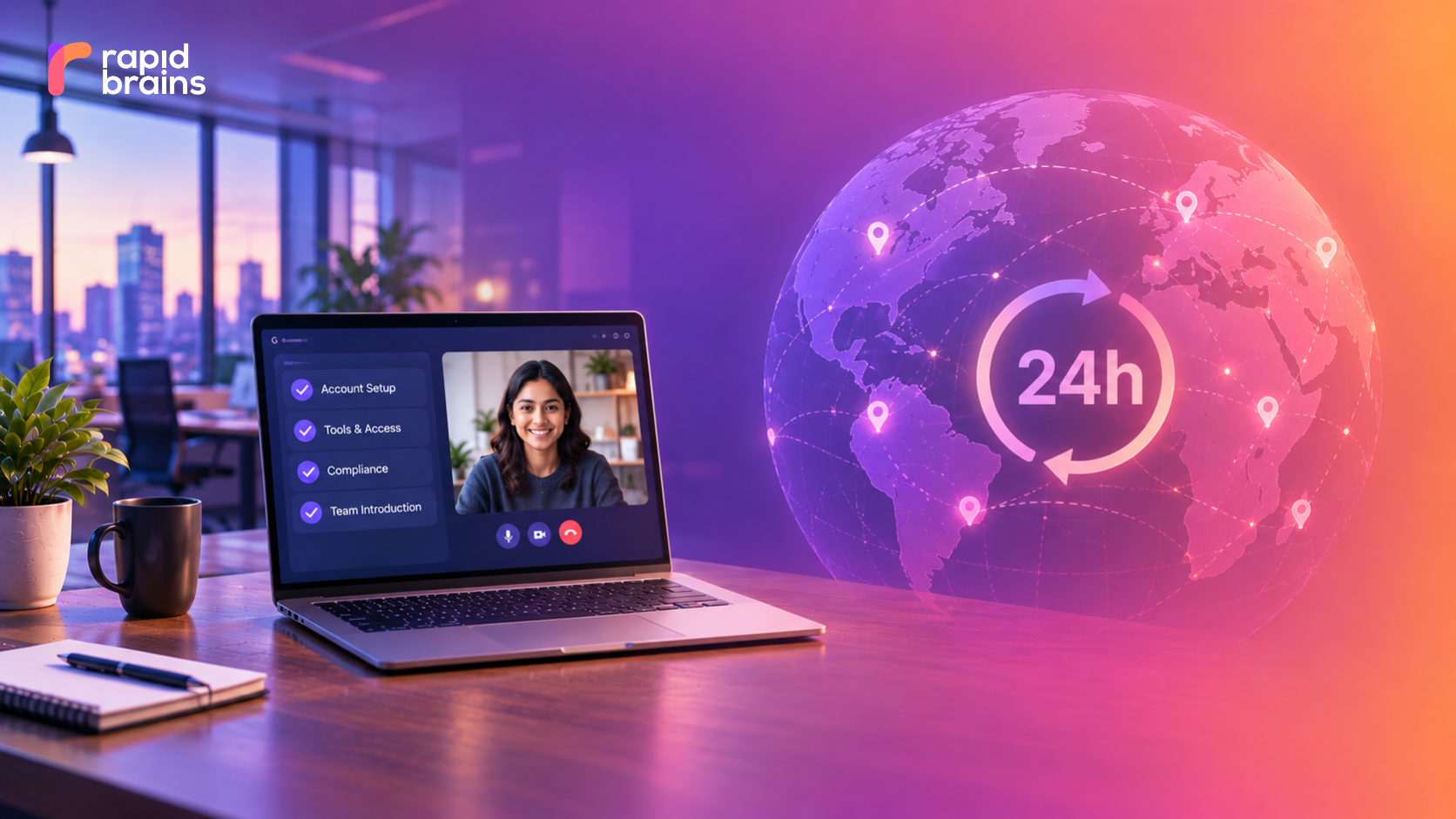
RapidBrains solves this talent bottleneck by matching growing software teams with dedicated, remote AI Full-Stack Developers, backend engineers, and specialized tech talent in as little as 24 hours.
- Pre-Vetted Software Talent: Gain instant access to senior developers experienced across Python, Node.js, React, vector search frameworks, and secure API integrations.
- Cost-Effective Sourcing: Reduce developer overhead significantly with transparent hourly rates and zero long-term retainers or hidden hiring fees.
- Seamless Sprint Onboarding: Integrate remote engineers directly into your active Jira workflows, GitHub repositories, daily standups, and deployment pipelines from day one.