As engineering teams scale across borders, the adoption of generative AI tools has reached a tipping point. Developers love AI assistants like ChatGPT, Claude, Cursor, and GitHub Copilot because they boost sprint velocity and instantly solve complex syntax problems.
However, when engineering leaders manage global, distributed remote teams, a hidden risk emerges: Shadow AI.
Shadow AI occurs when remote developers independently adopt unvetted consumer AI tools, plugins, or web interfaces to complete sprint tickets without centralized authorization. While the intention is to write code faster, the unintended consequences can create catastrophic vulnerabilities in data privacy, open-source licensing, and infrastructure security.
The Invisible Risks of Shadow AI
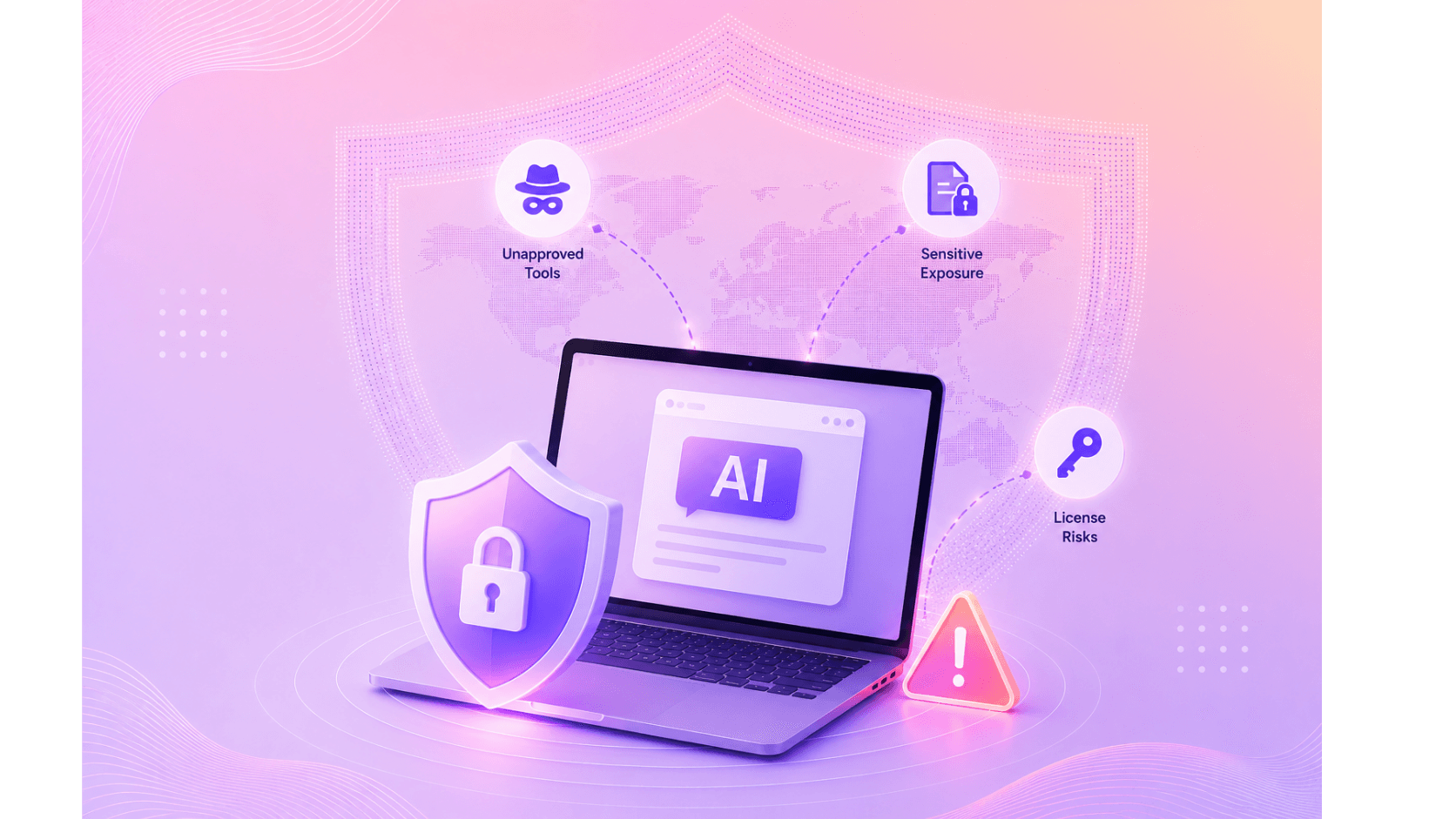
When engineers work remotely across different time zones, monitoring their day-to-day workflow tooling becomes nearly impossible. Unregulated AI usage exposes enterprise software to three main vulnerabilities:
A. Proprietary Data & IP Leakage
When developers paste proprietary source code, internal API endpoints, database schemas, or customer records into public consumer AI models, that data may be ingested to train public base models. Once confidential IP leaves your secure perimeter, it can potentially be surfaced to third parties through model extraction vectors.
B. Open-Source License Contamination
AI code generators trained on public repositories frequently suggest snippets protected by restrictive open-source licenses (such as GPL or AGPL). If a remote developer unknowingly merges AI-generated GPL-licensed code into a proprietary enterprise application, it can trigger legal compliance issues, potentially forcing the organization to open-source its proprietary codebase.
C. Vulnerability Injection & Hallucinated Dependencies
AI coding tools don’t inherently test for security flaws. They can introduce hardcoded secrets, SQL vulnerabilities, or “hallucinated package dependencies.” Attackers exploit this by creating malicious packages with names that public AI tools commonly invent (typosquatting), waiting for unsuspecting remote developers to run npm install or pip install.
Building an Enterprise Shadow AI Prevention Strategy
Outlawing AI entirely is counterproductive, it slows down your dev velocity and leads engineers to hide their tool usage. Instead, engineering leaders must replace Shadow AI with Managed AI Protocols.
Step 1: Enforce Zero-Data-Retention Enterprise AI Accounts
Never leave developers to buy individual consumer subscriptions. Provide your distributed engineering pods with enterprise-grade AI tools (e.g., GitHub Copilot Enterprise, Azure OpenAI endpoints, or private Claude API gateways) that explicitly enforce Zero Data Retention (ZDR) agreements. This guarantees your codebase is never used for model re-training.
Step 2: Automate License & Dependency Auditing in CI/CD
Don’t rely on human code reviews to spot license violations or hallucinated packages. Integrate automated security tooling into your pull request pipelines:
- License Compliance Scanners: Tools like FOSSA or Black Duck detect copyleft license snippets instantly.
- Dependency Verification: Enforce strict package registry lockfiles and use software bill of materials (SBOM) tools to flag unauthorized packages before code hits staging.
Step 3: Secure Endpoint Controls for Remote Workstations
When sourcing talent globally, ensure remote environments are secured at the device level:
- Deploy Mobile Device Management (MDM) software to restrict unvetted browser extensions and unauthorized local LLMs.
- Use Secure Virtual Desktop Infrastructure (VDI) or remote dev environments (like GitHub Codespaces) so proprietary code never resides locally on unmanaged personal machines.
How RapidBrains Insulates Your AI Development Pipeline
Mitigating Shadow AI risk begins before a developer writes their first line of code. At RapidBrains, we ensure your global talent expansion doesn’t compromise enterprise governance.
- Vetted, Security-Aware Engineers: Our global talent pool of pre-screened remote AI developers is trained in enterprise security hygiene, secure coding standards, and IP compliance protocols.
- Legal Insulation & IP Protection: We act as your compliance shield, enforcing strict non-disclosure agreements (NDAs) and custom IP transfer contracts aligned with global security frameworks.
- Seamless Integration: RapidBrains developers integrate directly into your internal tooling, SSO authentication, MDM policies, and CI/CD workflows from day one, ensuring zero friction and zero reliance on unvetted tools.
Shadow AI isn’t an engineering failure; it’s a sign that your developers are eager to move fast. Banning these tools only pushes usage further into the dark, increasing your exposure to IP leaks, license violations, and security breaches.
The most successful engineering leaders don’t fight generative AI; they build clear, secure rails around it. By replacing unregulated consumer apps with zero-data-retention enterprise tools, automated CI/CD security scanning, and security-aware developers, you can turn a major compliance headache into a sustainable competitive advantage.
Partnering with platforms like RapidBrains allows you to scale global talent seamlessly while maintaining strict enterprise governance. With pre-screened developers trained in security protocols and integrated into your secure infrastructure from day one, you get the speed of remote engineering without sacrificing the safety of your codebase.