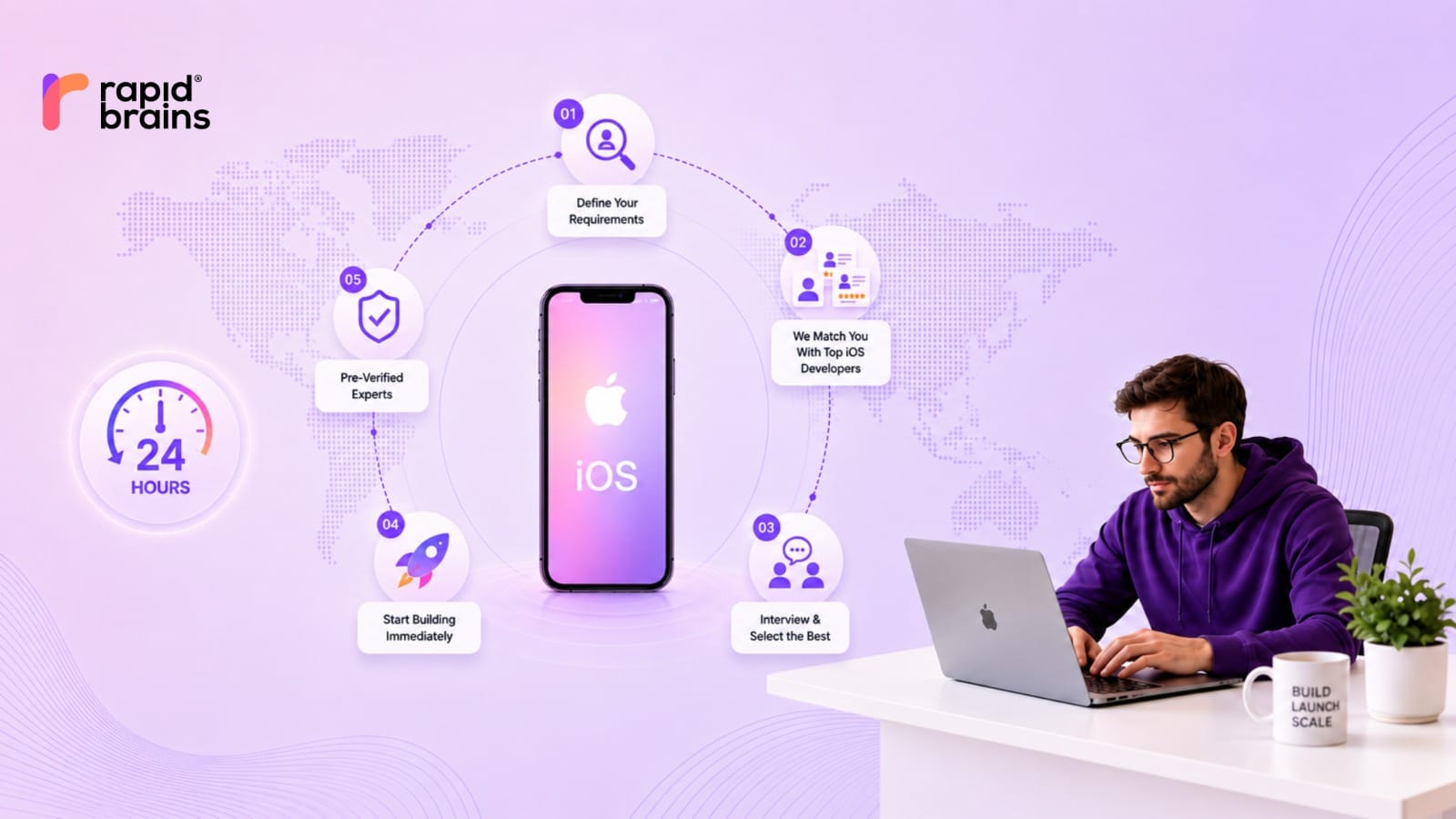
For years, scaling a software engineering team meant choosing between two rigid extremes. Either you committed to months-long full-time recruiting cycles with heavy permanent payroll overhead, or you threw short-term tickets at open freelance marketplaces and hoped the code held together.
Neither model works for modern product organizations.
In an engineering landscape shaped by rapid AI adoption, specialized cloud infrastructure, and tight capital efficiency targets, full-time hiring routinely drags past 70 days while senior engineering salaries climb out of reach. At the same time, ad-hoc gig workers rarely stick around long enough to understand your architecture.
That is why contract software developer staffing has evolved from a temporary emergency measure into a core strategic pillar for CTOs, VPs of Engineering, and technical founders. When executed properly, contract staffing lets you inject pre-vetted, senior engineering capacity directly into your active sprints in days rather than quarters.
This guide breaks down how contract developer staffing works today, when to deploy it, how the major staffing models compare, and how to avoid the compliance and quality traps that derail distributed teams.
Why Engineering Leaders Are Rethinking Permanent-Only Hiring
The traditional default in tech was simple: every core contributor had to be a full-time W-2 or local permanent employee. Today, three structural realities are forcing engineering leaders to adopt a more flexible workforce architecture.
1. The Barbell Talent Market and Senior Bottlenecks
While generative AI tools have accelerated boilerplate code creation, they have not reduced the need for experienced engineers. In fact, they have raised the bar. As code generation speeds up, architectural judgment, security verification, and production reliability become the primary bottlenecks.
The hiring market has split into a sharp barbell: abundant junior applicants on one end, and fierce competition for senior specialists in AI, cloud-native infrastructure, cybersecurity, and distributed systems on the other. Trying to fill every specialized requisition through traditional permanent recruiting stalls product roadmaps for months.
2. True Fully Loaded Cost of Full-Time Hires
Base salary is only the starting line for a permanent local engineer. Once you factor in employer payroll taxes, health and retirement benefits, hardware, onboarding time, and 20 to 30 percent external recruiter fees, the true first-year cost of a senior engineer frequently lands 1.3 to 1.4 times above base compensation.
If product priorities shift six months later or a funding round gets delayed, unwinding permanent headcount carries steep financial and cultural penalties.
3. The Need for Elastic Sprint Capacity
Product engineering is rarely linear. You might need three extra React and Node.js engineers for a six-month platform migration, a dedicated MLOps architect to take a retrieval-augmented generation pipeline into production, or a QA automation specialist ahead of a major enterprise release.
Contract software developer staffing gives engineering leaders elastic capacity: the ability to scale specialized skills up or down around concrete roadmap milestones without locking the business into permanent fixed overhead.
What Is Contract Software Developer Staffing?
Contract software developer staffing is the practice of embedding external, vetted software engineers into your internal engineering organization for a defined period or ongoing milestone cycle. Unlike traditional project outsourcing, where you hand a specification document to an outside agency and wait for a black-box delivery, contract staffing keeps technical leadership, architecture decisions, and daily sprint management inside your team.
Contract developers join your Slack channels, attend your daily standups, commit code to your GitHub repositories, and follow your CI/CD workflows. The difference lies in how they are sourced, vetted, employed, and scaled.
Contract Staffing vs. Managed Outsourcing vs. Freelance Gigs
Engineering leaders often conflate these three models, which leads to misaligned expectations:
-
Traditional Project Outsourcing: You outsource the entire delivery outcome to a vendor. You lose day-to-day visibility into code quality and architecture, and institutional knowledge stays with the agency when the contract ends.
-
Open Freelance Marketplaces: You hire independent gig workers directly for short tasks or hourly blocks. Many freelancers juggle multiple clients simultaneously, leading to fragmented focus, context switching, and sudden turnover mid-sprint.
-
Dedicated Contract Developer Staffing: You add full-time, dedicated contract engineers to your own team through a specialized talent partner. The engineers work exclusively on your product while your staffing partner handles vetting, payroll, statutory benefits, and compliance.
When Contract Developer Staffing Makes the Most Strategic Sense
Contract staffing is not a replacement for your core product leadership. Instead, it acts as a force multiplier when deployed in four high-leverage scenarios.
Accelerating Time-to-Market on Critical Launches
When a board commitment, enterprise customer deadline, or competitive window leaves zero room for a 90-day hiring cycle, contract staffing bridges the gap immediately. Pre-vetted engineers can step into an active codebase within a week and begin shipping pull requests while permanent searches run in the background.
Injecting Niche Technical Expertise
Hiring a full-time Kubernetes security architect, Rust systems developer, or generative AI deployment engineer locally can take half a year. Contract staffing lets you bring in proven specialists who have already solved those exact scaling problems elsewhere, allowing them to build the foundation and upskill your internal engineers along the way.
De-Risking Long-Term Hires Through Contract-to-Hire
Resumes and 45-minute algorithmic interviews are notoriously weak predictors of real-world engineering performance. Engaging a developer on an initial three-to-six-month contract lets you evaluate how they communicate, handle code reviews, debug production issues, and collaborate with your team before extending a permanent offer.
Extending Runway Without Sacrificing Velocity
For venture-backed startups and mid-market tech firms, balancing burn rate against product velocity is a constant tightrope walk. Blending a lean core of permanent local tech leads (roughly 40 to 50 percent of the organization) with dedicated global contract developers preserves capital efficiency while maintaining high weekly deployment output.
Comparing the Four Main Contract Developer Staffing Models
Not all contract staffing channels deliver the same combination of speed, code quality, and legal protection. Choosing the wrong channel often trades a recruiting bottleneck for a management or compliance headache.
|
Evaluation Criteria |
Open Freelance Marketplaces |
High-Markup Talent Networks |
DIY Sourcing + Traditional EOR |
Integrated Talent Partner (RapidBrains) |
|
Technical Vetting |
Minimal or self-reported; your engineers do the screening. |
Varies from automated tests to live interviews. |
None; EORs only process payroll for talent you find yourself. |
Multi-stage, stack-specific coding, architecture, and communication vetting. |
|
Time-to-Deploy |
1 to 3 weeks (including proposal review and interviews). |
1 to 2 weeks. |
60 to 90 days (manual sourcing plus legal onboarding). |
Days (pre-vetted engineers matched to your exact tech stack). |
|
Developer Dedication |
Low; contractors frequently split hours across multiple clients. |
Moderate to high, though hourly billing encourages short stints. |
High (full-time dedicated), if you hire the right person. |
100% full-time dedicated to your engineering team and sprint cadence. |
|
Pricing & Margin Transparency |
Hourly rates plus platform fees; heavy markups on senior talent. |
High hourly rates with 40% to 60% hidden platform spreads and buyout fees. |
Base EOR fee ($599+/month) plus high internal recruiting costs. |
Transparent, predictable monthly engagement with zero hidden buyout traps. |
|
Compliance & IP Protection |
High contractor misclassification risk and complex cross-border IP enforcement. |
Contractor agreements; compliance burden often remains on client. |
Full local employment compliance, but high offboarding friction for bad hires. |
End-to-end global compliance, local statutory benefits, and watertight IP assignment. |
Five Hidden Traps Engineering Leaders Must Avoid
Even experienced CTOs can stumble when scaling with contract developers if they overlook operational and legal details early on. Keep five common pitfalls on your radar before signing your next staffing agreement.
1. Treating Compliance Platforms as Recruiting Engines
Traditional Employer of Record (EOR) tools excel at local tax withholding and employment contracts, but they are completely hands-off when it comes to technical quality. If you source an unvetted international engineer through job boards and lock them into a standard local employment contract via an EOR, a technical mis-hire becomes expensive to unwind due to mandatory notice periods and statutory severance rules. Always verify technical competence before executing cross-border employment paperwork.
2. Triggering Worker Misclassification Penalties
Hiring an international developer on a simple independent contractor invoice while treating them like a full-time employee (dictating fixed working hours, requiring attendance at daily standups, and providing company hardware) creates severe legal exposure. Tax and labor authorities in North America, Europe, and Asia increasingly penalize companies for disguised employment. Proper contract staffing routes engagements through compliant local employment structures that eliminate misclassification risk.
3. Weak Intellectual Property and Confidentiality Clauses
Under many international jurisdictions, intellectual property created by an independent contractor does not automatically transfer to your company unless explicit, locally enforceable invention assignment agreements are in place. Make sure every contract developer is bound by jurisdiction-specific IP assignment and NDA protections from day one.
4. Invasive Surveillance Over Outcome-Driven Management
Some hourly contractor platforms rely on desktop tracking software that logs keystrokes and captures periodic screenshots. Senior, high-agency engineers refuse to work under factory-floor surveillance, leaving you with developers who optimize for green activity bars rather than clean architecture. Measure contract engineers the exact same way you measure permanent staff: merged pull requests, code review quality, sprint velocity, and system reliability.
5. Failing to Invest in Day-One Onboarding
The fastest way to waste a contract developer's first month is to treat them like an outsider. If they spend two weeks waiting for repository permissions, staging credentials, and architectural documentation, your sprint timeline suffers. Prepare environment access, onboarding docs, and a clear starter ticket before their start date.
A Step-by-Step Playbook for Hiring Contract Developers
To get production value out of contract software developer staffing from week one, follow a disciplined four-step rollout:
-
Define the Technical Scope and Overlap Window: Document the exact stack, seniority expectations, system ownership boundaries, and required synchronous overlap hours (for example, a four-hour daily overlap between European or US mornings and Indian engineering hubs).
-
Prioritize Live Architectural Vetting Over Resume Pedigree: Focus interviews on practical problem-solving, past production systems shipped, and clear written communication rather than brand-name company logos.
-
Align Legal Structure With Engagement Horizon: For engagements lasting three months or longer, use an integrated staffing and compliance model that provides full-time dedication, statutory benefits, and enforceable IP protection rather than loose freelance invoices.
-
Integrate Into Core Engineering Rituals: Assign an internal onboarding buddy, include contract engineers in sprint planning and retrospectives, and give them clear ownership over defined services or product modules.
How RapidBrains Simplifies Contract Developer Staffing
Building a high-performing distributed engineering team should not require your senior leads to become full-time recruiters or international labor lawyers.
RapidBrains combines rigorous technical vetting with turnkey global compliance in a single streamlined workflow:
-
Pre-Vetted Senior Talent: Every developer in the RapidBrains network undergoes practical coding assessments, system design reviews, and communication screening before reaching your shortlist. You only interview candidates who match your exact stack and engineering standards.
-
Deployment in Days, Not Months: Because our talent pipeline is already verified and ready for international deployment, you can move from technical requirement to active sprint contribution in days.
-
Zero Compliance or Entity Overhead: RapidBrains manages local contracts, payroll, taxes, statutory benefits, and IP protection across major global tech hubs, shielding your organization from misclassification risks.
-
Dedicated Team Continuity: RapidBrains engineers work exclusively as full-time members of your engineering team, giving you the stability and institutional knowledge of internal staff with the flexibility of contract scaling.
Compliance is a commodity, while engineering execution is your true competitive advantage. When you pair strong internal product leadership with pre-vetted, compliant contract developers, your roadmap stops waiting on recruiting bottlenecks and starts moving at the speed your market demands.